Replication Controller vs ReplicaSet in Kubernetes
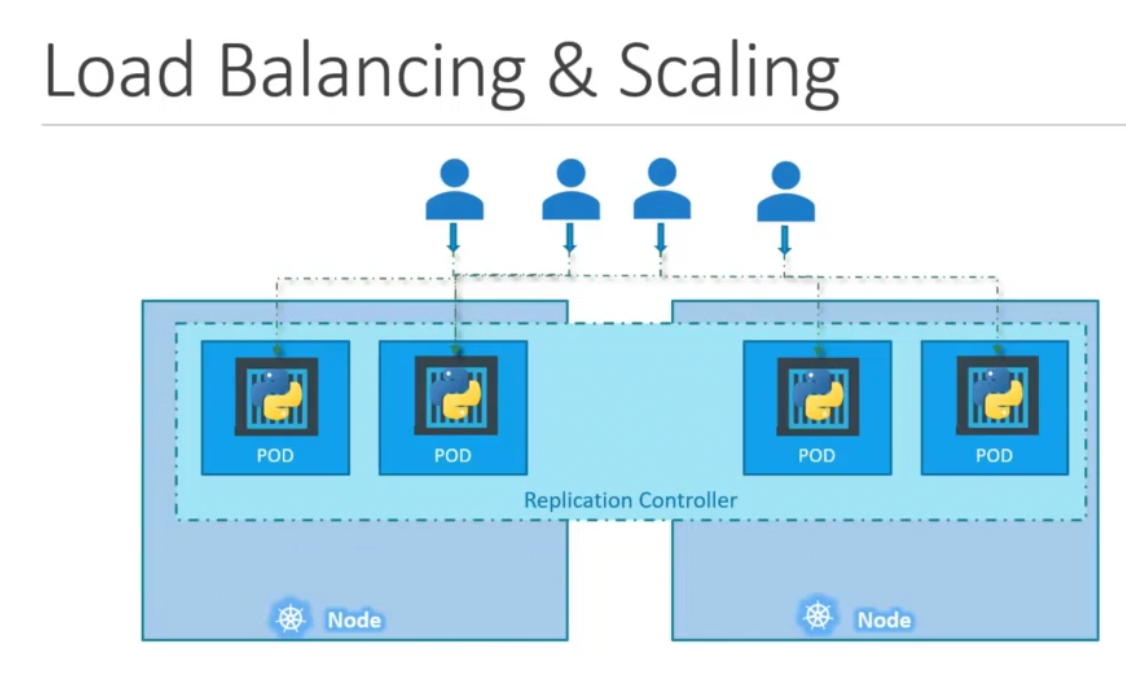
Both ReplicationController (RC) and ReplicaSet (RS) ensure that a specified number of pod replicas are running at any given time, but ReplicaSet is the newer and more flexible version of ReplicationController.
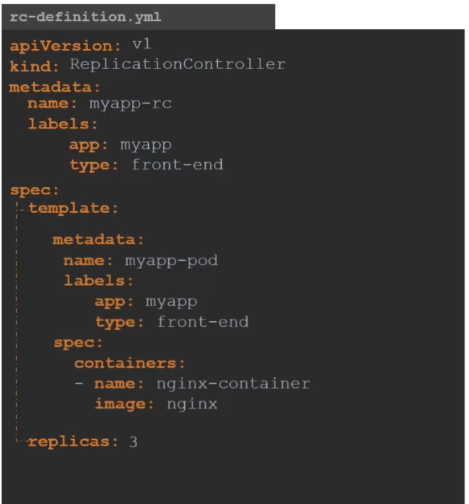
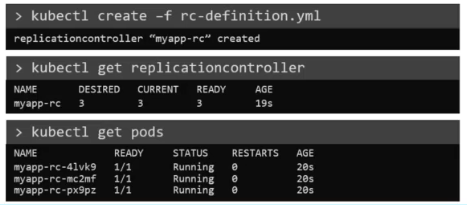
1. Replication Controller (RC)
🔹 Purpose: Ensures a specified number of identical pods are running.
🔹 Key Features:
- Watches running pods and replaces failed ones.
- Uses equality-based selectors (
matchLabels). - Legacy feature; replaced by ReplicaSet in modern Kubernetes.
💡 Use Case: Basic pod scaling in older Kubernetes versions.
2. ReplicaSet (RS)
🔹 Purpose: Enhanced version of ReplicationController, supporting more flexible pod selection.
🔹 Key Features:
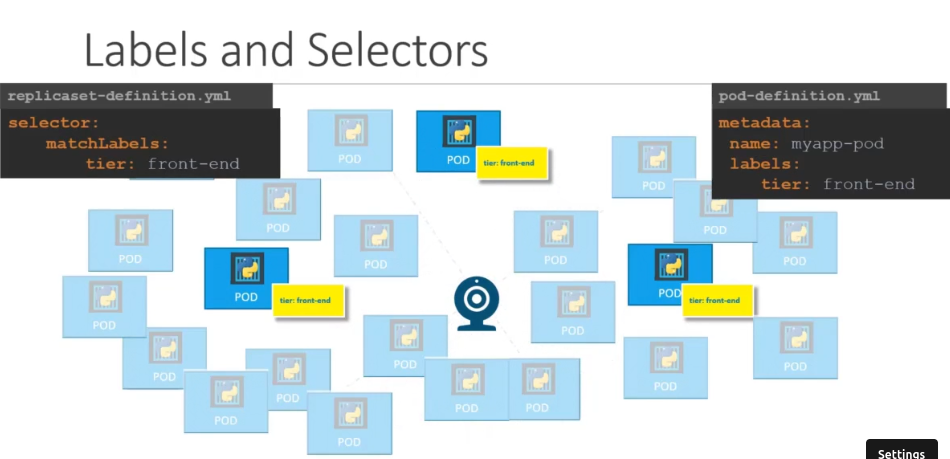
- Uses label selectors (supports
matchExpressionsalong withmatchLabels). - Works with Deployments, making pod management easier.
- Supports rolling updates when combined with Deployments.
💡 Use Case: Used in modern Kubernetes for pod scaling and high availability. Usually not used directly Deployments manage ReplicaSets internally.
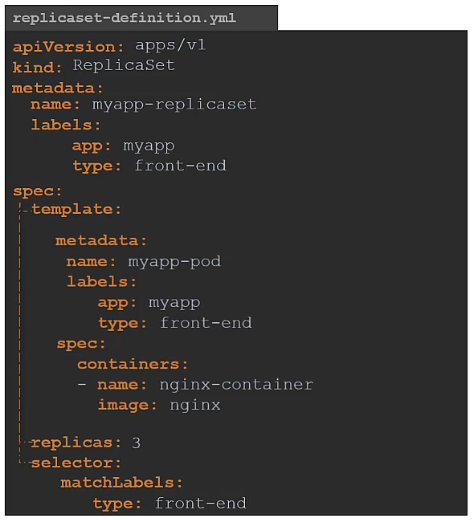
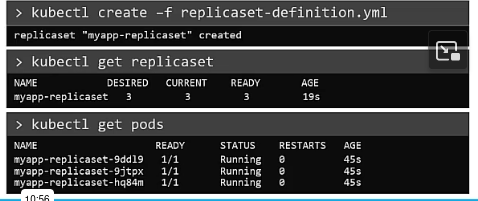
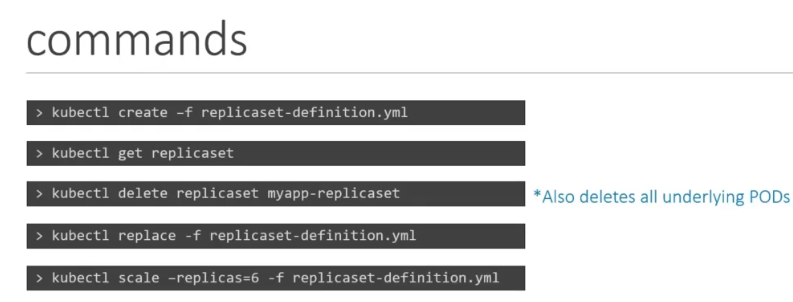
Command to scale replicas
kubectl scale --replicas=6 -f replicaset-defination.yml