Amazon EBS (Elastic Block Store)
🔹 Definition:
EBS is a block-level storage service that provides persistent storage volumes for EC2 instances.
- Works like a virtual hard disk.
- Survives instance stop/start (unlike instance store).
Key Features
- Persistent → Data is retained even if instance is stopped/terminated (if
DeleteOnTermination = false). - Block storage → Low-latency, random read/write access.
- Replicated in AZ → Data automatically replicated within the same AZ for durability.
- Attach/Detach → Volumes can be attached/detached from EC2s in the same AZ.
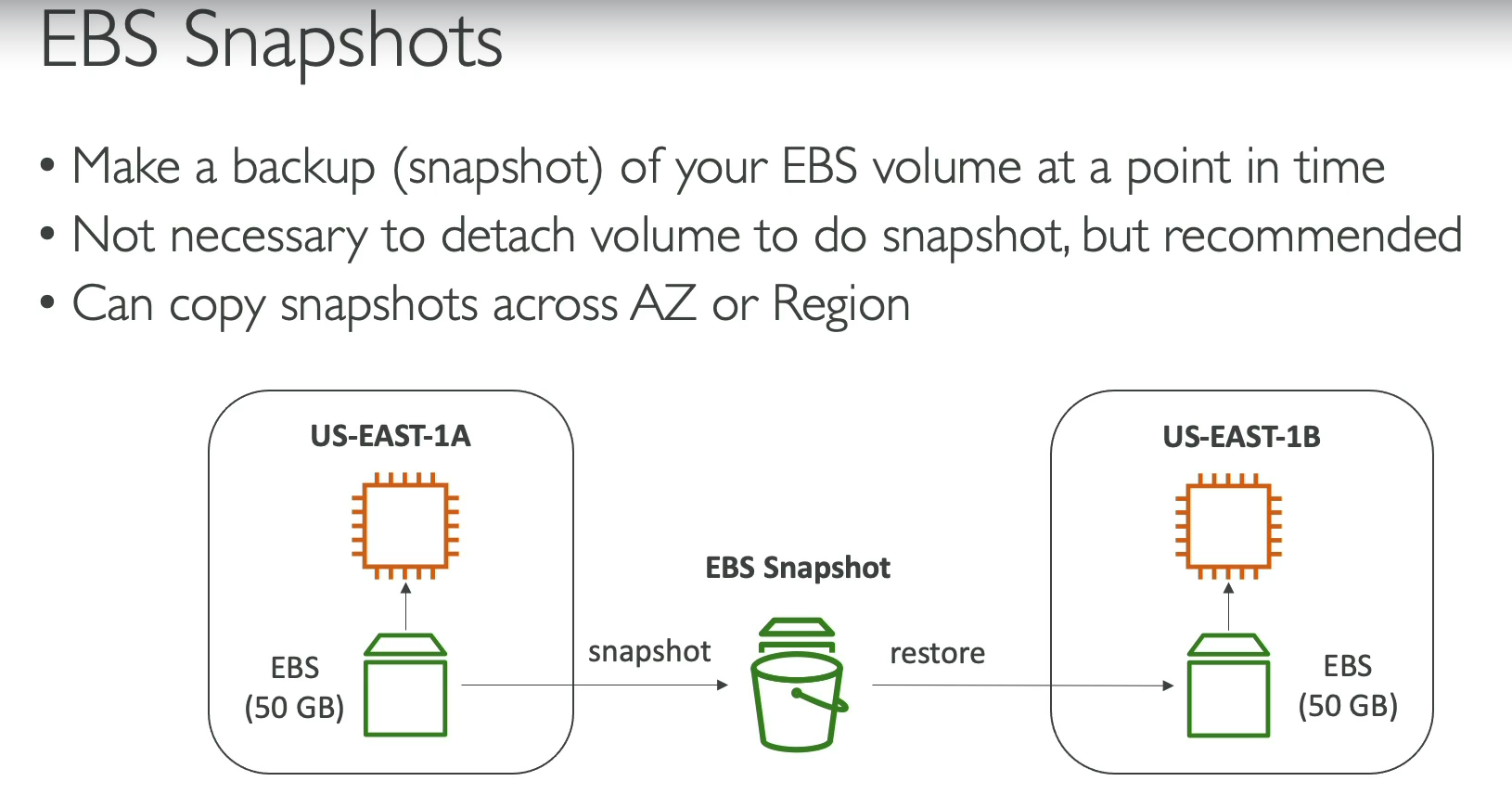
- Snapshots → Point-in-time backups stored in S3 (can be copied to other regions).
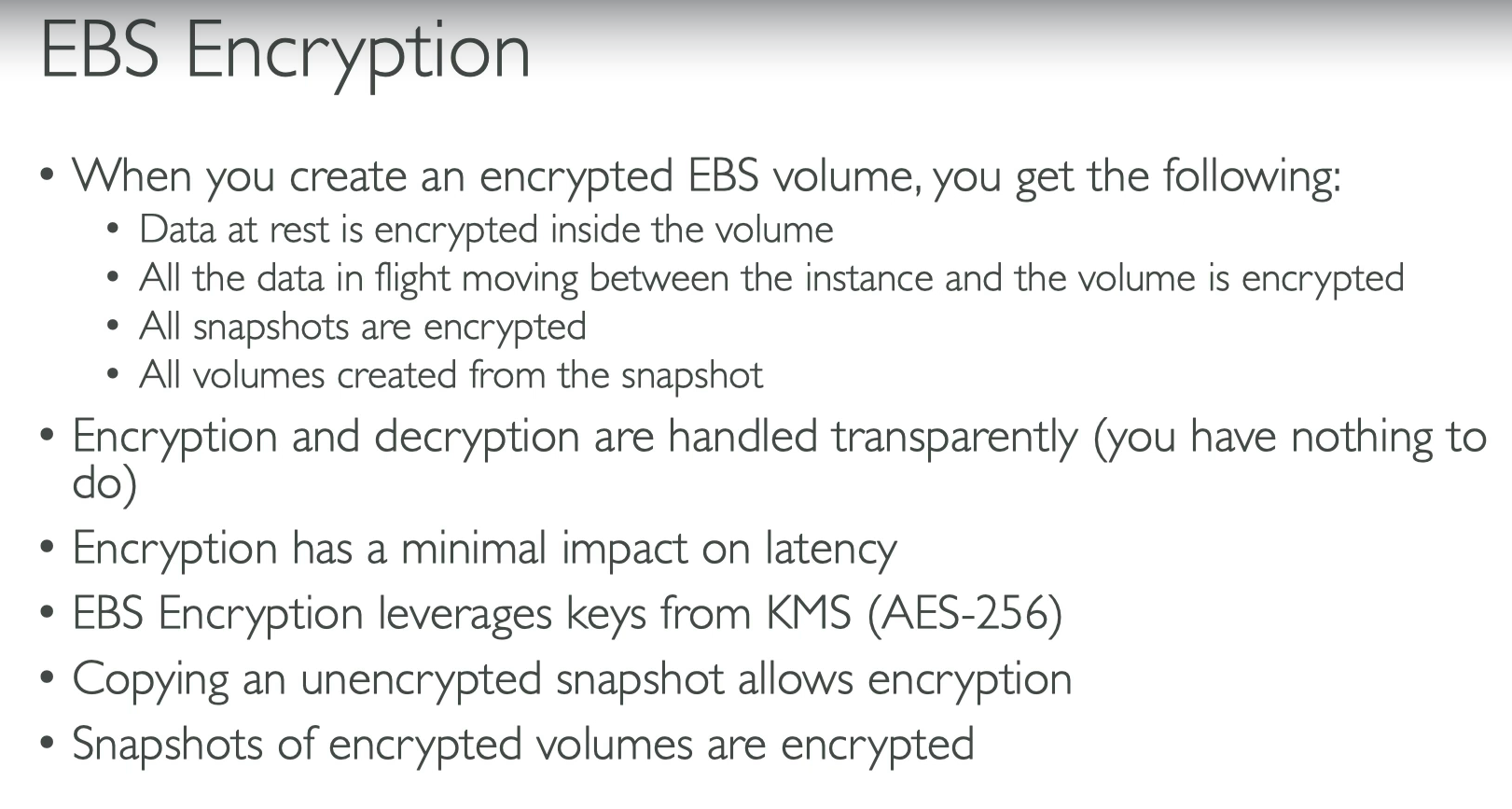
- Encryption → At-rest & in-transit with AWS KMS.
Types of EBS Volumes
| Type | Use Case |
|---|---|
| gp3 (General Purpose SSD) | Default; balance of price/performance. |
| gp2 (Older GP SSD) | Still used; performance scales with size. |
| io2/io2 Block Express (Provisioned IOPS SSD) | High-performance workloads (databases, critical apps). |
| st1 (Throughput Optimized HDD) | Big data, data warehouses, log processing. |
| sc1 (Cold HDD) | Lowest cost, infrequent access, archival. |
Performance
- Measured in IOPS (Input/Output Operations per Second) & Throughput (MB/s).
- gp3 → 3,000 IOPS baseline (independent of size).
- io2 → Up to 256,000 IOPS (enterprise-grade).
EBS vs Instance Store
| EBS | Instance Store |
|---|---|
| Persistent | Ephemeral (data lost on stop/terminate) |
| Can take snapshots | ❌ No snapshots |
| Slower than instance store | Very fast (direct hardware) |
| Extra cost | Included with instance |
EBS SNAPSHOTS